MY TAKE: The Pentagon punished Anthropic for purple strains it accepted from OpenAI hours later – Cyber Tech
By Byron V. Acohido
KINGSTON, Wash. — On Friday afternoon, President Trump ordered each federal company to cease utilizing Anthropic’s AI expertise. Protection Secretary Pete Hegseth adopted by designating the corporate a “supply-chain threat to nationwide safety,” a label the federal government usually reserves for firms like Huawei.
Associated: Claude’s reminiscence vs. ChatGpt’s
 Anthropic’s offense: refusing to take away contract provisions that prohibited the Pentagon from utilizing its AI mannequin, Claude, for mass home surveillance or absolutely autonomous weapons.
Inside hours, OpenAI introduced it had struck a deal to interchange Claude on the Pentagon’s categorized networks. CEO Sam Altman stated his firm shares the identical purple strains. The Pentagon apparently accepted these phrases from OpenAI whereas punishing Anthropic for insisting on them.
If that sounds incoherent, it’s. However provided that you’re taking a look at this as a contract dispute. Seen as the newest cycle in a sample I’ve been overlaying for a decade, the logic comes into focus.
In October 2016, I watched a larger-than-life Edward Snowden seem through Google Plus Hangout on two large screens on the Boulders Resort in Scottsdale, Arizona. About 250 attendees of IDT911’s Privateness XChange Discussion board sat watching a younger American exile, beaming in from Russia, clarify his rationale for handing categorized NSA paperwork to journalists.
 The irony was arduous to overlook: his picture was delivered by means of Google’s globe-spanning knowledge facilities, the identical infrastructure the NSA had tapped to conduct the mass surveillance Snowden had uncovered. Three years after his disclosures, what he had revealed was not a rogue operation. It was structure.
The NSA had constructed the plumbing to gather phone metadata on just about each American, approved by secret courtroom orders below Part 215 of the Patriot Act. The gathering ran by means of the infrastructure itself: the cables, the switches, the service networks. The federal government didn’t want your cellphone. It wanted your cellphone firm.
The general public response produced the USA FREEDOM Act of 2015, which ended the majority phone metadata program and added transparency necessities for the surveillance courtroom. Reform occurred. However surveillance tailored. Assortment migrated to different authorized authorities, Part 702 of FISA and Govt Order 12333, that Congress and the courts have been slower to constrain. The lesson was structural: public accountability didn’t cease surveillance. It pushed it into much less seen channels.
Three years after the Snowden disclosures, the choke level moved from the cable to the gadget. In February 2016, the FBI sought a courtroom order compelling Apple to construct customized software program that will bypass the passcode safety on the iPhone recovered from the San Bernardino shooter. Apple CEO Tim Prepare dinner revealed an open letter calling it a backdoor and refused.
The FBI invoked the All Writs Act of 1789. Apple assembled a authorized staff led by former Solicitor Basic Ted Olson, who instructed CNN that compliance would result in a police state. Main tech companies filed amicus briefs. Public opinion cut up roughly in half.
The case by no means produced a ruling. The FBI discovered a 3rd occasion, reportedly an Australian agency known as Azimuth Safety, that cracked the cellphone utilizing a zero-day vulnerability. The federal government dropped its demand the day earlier than the listening to. Apple held its floor. No backdoor was constructed. No binding precedent was set. However the FBI paid greater than $1.3 million for the exploit instrument, and a federal courtroom later dominated the company may use it in future investigations. The state discovered a workaround, and the underlying functionality query was by no means resolved.
Now the choke level has moved once more. The Pentagon’s dispute with Anthropic is just not about accessing a tool or tapping a cable. It’s about who controls the behavioral boundaries of an AI mannequin that operates inside categorized navy methods. Claude was already deployed on the Pentagon’s most delicate networks.
It was reportedly used within the operation to seize Nicolás Maduro. Protection officers praised its capabilities. By all accounts, the 2 contested safeguards, the surveillance prohibition and the autonomous weapons restriction, had by no means been triggered in apply.
The problem was not operational. It was contractual. The Pentagon wished the best to make use of Claude for “all lawful functions” and not using a non-public firm retaining the flexibility to outline exceptions. Anthropic’s place was that sure makes use of fall outdoors what in the present day’s AI fashions can safely do. The Pentagon’s place was that when the navy buys a instrument, its personal requirements govern the way it will get used.
That framing is acquainted. Within the Snowden period, the federal government argued that metadata assortment was authorized below present statute and due to this fact didn’t require further constraints. With Apple, the federal government argued that the All Writs Act gave courts authority to compel technical help. In every case, the state asserted that present authorized frameworks already supplied ample safeguards. In every case, the corporate or the whistleblower argued that the structural functionality being sought would outlast any explicit authorized interpretation.
The escalation follows a line. The NSA harvested knowledge by tapping infrastructure that carriers constructed and maintained. The FBI sought to compel a tool producer to weaken security measures it had engineered. The Pentagon sought to compel an AI firm to take away behavioral safeguards it had educated into the mannequin itself. Cables, then units, then fashions. Every cycle, the gathering level strikes nearer to the layer the place judgment and language reside.
What makes this spherical completely different is the pace and the stakes. Snowden’s disclosures took years to provide legislative reform. The Apple case performed out over six weeks and produced no binding regulation. The Anthropic confrontation went from negotiation to federal blacklisting in days. The compression of those cycles is itself a part of the sample. The window for public deliberation will get shorter every time.
Altman’s transfer deserves scrutiny. OpenAI introduced the identical purple strains Anthropic had drawn and secured the contract Anthropic misplaced. If the Pentagon accepted these phrases from one firm whereas punishing one other for an identical phrases, the dispute was by no means concerning the safeguards. It was about who will get to sit down on the desk and on what phrases. Anthropic says it can problem the supply-chain designation in courtroom. A whole lot of staff at OpenAI and Google have signed petitions in help.
The sample from the earlier two cycles suggests what occurs subsequent. Some reform will observe. Some constraint will likely be imposed. And the surveillance functionality will migrate to the subsequent layer down, the one we haven’t constructed governance for but. The query price asking is just not whether or not Anthropic’s stand was principled or strategic. It’s what the subsequent choke level appears like, and whether or not we’ll acknowledge it earlier than the structure is already in place.

Acohido
Pulitzer Prize-winning enterprise journalist Byron V. Acohido is devoted to fostering public consciousness about the best way to make the Web as non-public and safe because it must be.
(Editor’s notice: I used Claude and ChatGPT to help with analysis compilation, supply discovery, and early draft structuring. All interviews, evaluation, fact-checking, and closing writing are my very own. I stay chargeable for each declare and conclusion.)

TikTok takes on U.S. Senators and billionaires as ban looms – Cyber Tech

Ask your self: How can genAI put your content material to work? – Cyber Tech
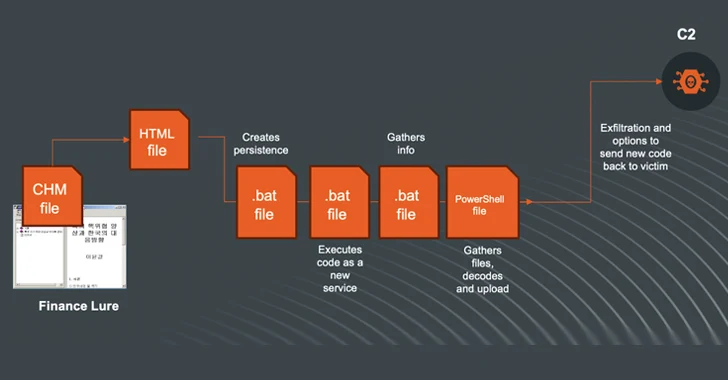
N. Korea-linked Kimsuky Shifts to Compiled HTML Assist Information in Ongoing Cyberattacks – Cyber Tech
About The Author

admin
Azeem Rajpoot, the author behind This Blog, is a passionate tech enthusiast with a keen interest in exploring and sharing insights about the rapidly evolving world of technology. With a background in Blogging, Azeem Rajpoot brings a unique perspective to the blog, offering in-depth analyses, reviews, and thought-provoking articles. Committed to making technology accessible to all, Azeem strives to deliver content that not only keeps readers informed about the latest trends but also sparks curiosity and discussions. Follow Azeem on this exciting tech journey to stay updated and inspired.
