What’s x402 and why will it remodel funds? – Cyber Tech
The subsequent period of funds: when cash strikes at web velocity
I simply discovered an attention-grabbing report by KPMG a few new cost customary known as x402. Have you ever heard of it? In case you haven’t, it’s constructed to make sure open, free, frictionless funds, and might be revolutionary for embedded, invisible finance.
Constructed by Coinbase, the x402 protocol is an open-source, web-native cost customary.
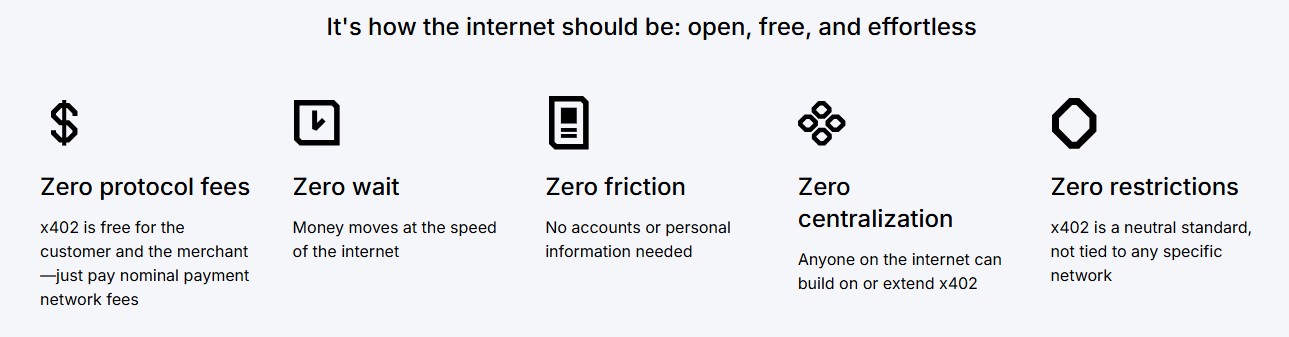
It was launched in Could 2025 to allow AI brokers, APIs, and content material utilizing stablecoins (primarily USDC) to pay for companies, and key companions supporting this infrastructure embody Cloudflare, Circle, Stripe, and AWS.
Why is it known as x402? As a result of it acts as an HTTP for cash, utilizing the long-unused 402 HTTP standing code, for automated machine-to-machine or human-to-machine transactions.
TBH, it goals to unravel a problem that’s been round for the previous fifty years. What’s the problem? The truth that the web was by no means designed for commerce. It was designed for data trade.
For a lot of the previous fifty years, funds have been constructed on infrastructure designed for a special world: a human-centric, card-based, offline monetary system. But right this moment’s economic system is digital, always-on, and more and more autonomous. The result’s a rising mismatch between how the web works and the way cash strikes.
The previous decade has delivered extraordinary progress – immediate funds, open banking, digital wallets and stablecoins – however the core rails nonetheless replicate legacy design rules. Cross-border funds nonetheless pause for weekends and holidays, onboarding nonetheless requires accounts and credentials, and transactions nonetheless assume a human on the keyboard … however the subsequent section of the digital economic system received’t be pushed primarily by people … it will likely be pushed by machines.
So x402 addresses a key flaw in right this moment’s web: native funds.
For many years, the web has lacked a local method to switch worth. We constructed the net to trade data, not cash. In consequence, the trade created workarounds – subscriptions, paywalls, saved playing cards and billing programs – all of which introduce friction and inefficiency.
Now a brand new strategy is rising.
x402 proposes an internet-native cost customary that enables programs to request and obtain cost immediately via customary net interactions. In easy phrases, it makes funds as straightforward as sending an online request or electronic mail.
Critically, it does this with a easy line of code.
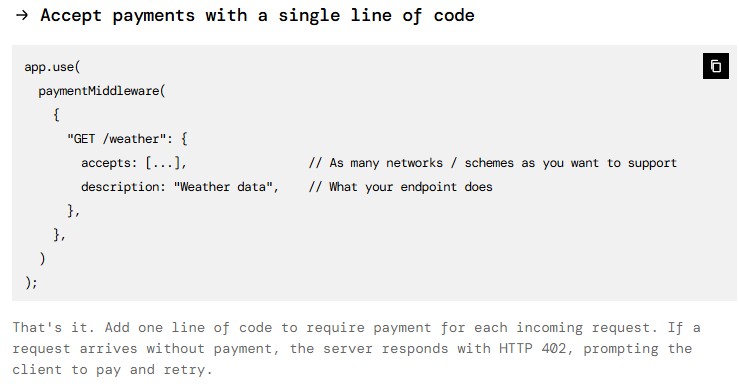
As an alternative of making accounts, coming into card particulars and subscribing to companies, a shopper – human or machine – can merely reply to an HTTP request that claims: “Fee required.”
This transforms funds from a separate course of right into a built-in function of the web itself.
Why does this matter?
As a result of the subsequent economic system will embody autonomous financial actors. Think about:
- AI fashions paying for knowledge in actual time
- IoT gadgets paying for electrical energy or bandwidth
- algorithms buying compute energy on demand
- AI brokers negotiating and settling micro-transactions throughout networks
Conventional cost rails have been by no means designed for this surroundings. They depend on accounts, credentials, onboarding processes and handbook approval flows – all friction factors that decelerate machine-speed commerce. Web-native cost protocols take away that friction and unlock new capabilities:
- micropayments at scale – fractions of a cent for knowledge or content material
- machine-to-machine commerce
- immediate settlement
- programmable worth trade
Briefly, they permit worth to maneuver on the velocity of the web, and the implications go far past sooner funds. If each API endpoint or net service can request cost immediately, then each digital interplay turns into a possible business transaction. This strikes us from primary embedded funds to a spot the place pricing, settlement and monetary logic are embedded immediately into digital infrastructure.
It’s invisible finance.
Companies may cost per API name, per knowledge request or per algorithm execution. Income shifts from subscription billing to consumption-based monetisation, aligning value with precise utilization.
The factor is that this transformation of funds isn’t taking place in isolation. It sits on the intersection of a number of main expertise shifts, together with:
- tokenised deposits and digital currencies
- stablecoins
- programmable funds
- agentic AI
- on-chain digital id for machines
- AI-driven fraud detection
Collectively, these improvements create the foundations for a programmable monetary system the place worth flows routinely between people, machines and platforms.
It additionally raises a variety of new governance questions.
- if an AI initiates a cost, who’s accountable?
- how do regulators monitor real-time machine transactions?
- how do AML and fraud frameworks adapt to autonomous programs?
Simply as open banking triggered new regulatory frameworks resembling PSD2, the subsequent period of funds would require up to date guidelines for AI-driven monetary exercise.
What does this imply for conventional monetary establishments?
I feel the message is obvious. The funds ecosystem is shifting from human-initiated transactions to machine-initiated worth flows. Banks and cost suppliers should subsequently rethink their structure to help:
- multi-asset funds (fiat, stablecoins, digital currencies)
- real-time programmable settlement
- AI-initiated transactions
- interoperable digital id programs
People who adapt early can be positioned to seize the rising machine economic system. People who don’t could discover that funds – the lifeblood of finance – more and more occur exterior the normal banking stack.

Japan says consultants met in China to ease considerations over discharge of handled radioactive Fukushima water – Cyber Tech

Month-to-month Replace #57 (Could 2023) – The renovation begins & The FIRE mission pauses – Whole Stability – Cyber Tech

The best way to Get a Enterprise Credit score Card with an EIN Solely – Cyber Tech
About The Author

admin
Azeem Rajpoot, the author behind This Blog, is a passionate tech enthusiast with a keen interest in exploring and sharing insights about the rapidly evolving world of technology. With a background in Blogging, Azeem Rajpoot brings a unique perspective to the blog, offering in-depth analyses, reviews, and thought-provoking articles. Committed to making technology accessible to all, Azeem strives to deliver content that not only keeps readers informed about the latest trends but also sparks curiosity and discussions. Follow Azeem on this exciting tech journey to stay updated and inspired.
